It feels like every week or two a new tool emerges that solves a critical issue for one of my businesses. Something that has been slowing us down or holding us back for years is suddenly gone. It’s incredible, and I’m in awe most days.
It’s also forced me to realize that the bottleneck on most days isn’t the tools anymore, it’s me.
As a bootstrapped and under-resourced entrepreneur for most of my career, I’ve been thriving with this increasing value unlock.
While the workload is certainly not decreasing, for the cost of a few subscriptions and maybe an extra $100 per month in overages, I’m able to act, move, and build like a much larger team.
Coding has been the biggest unlock. Last year, I made the decision to retire our nine-year-old booking and management platform that we used to run FRESH Markets. Originally a custom Ruby on Rails application built to manage around 20 events per year, we had outgrown it.
Pre-Claude Code, I spent the tail end of 2024 salvaging the existing database and integrating it into a brand new, next-generation application to handle our daily operations. At the time, I was mostly copy and pasting between ChatGPT and VS Code, since Claude Code hadn’t yet come along and made that feel archaic. We launched it in January 2025, and last year we ran close to 200 pop-up events and 7,000 bookings on the platform.
For years, one of my larger visions was to evolve our event booking platform into a broader marketplace where other organizers could run their events. Last fall, I started game planning.
I committed my first lines of code in a new branch in late September, and over the next 10 weeks I completely refactored our bespoke application into a multi-tenant marketplace.
We seeded half the marketplace with our close to 9,000 existing customers — local makers, artisans, food purveyors, and farms across the NJ, NY, and PA region — and the other half with the 200+ events per year we’re already running.
We launched it privately in December and are now beginning to roll it out publicly for other groups to use. The business model is simple. We provide event organizers, such as municipalities, Chambers of Commerce, and private operators like us, with a toolkit to run their events and a platform to recruit new vendors.
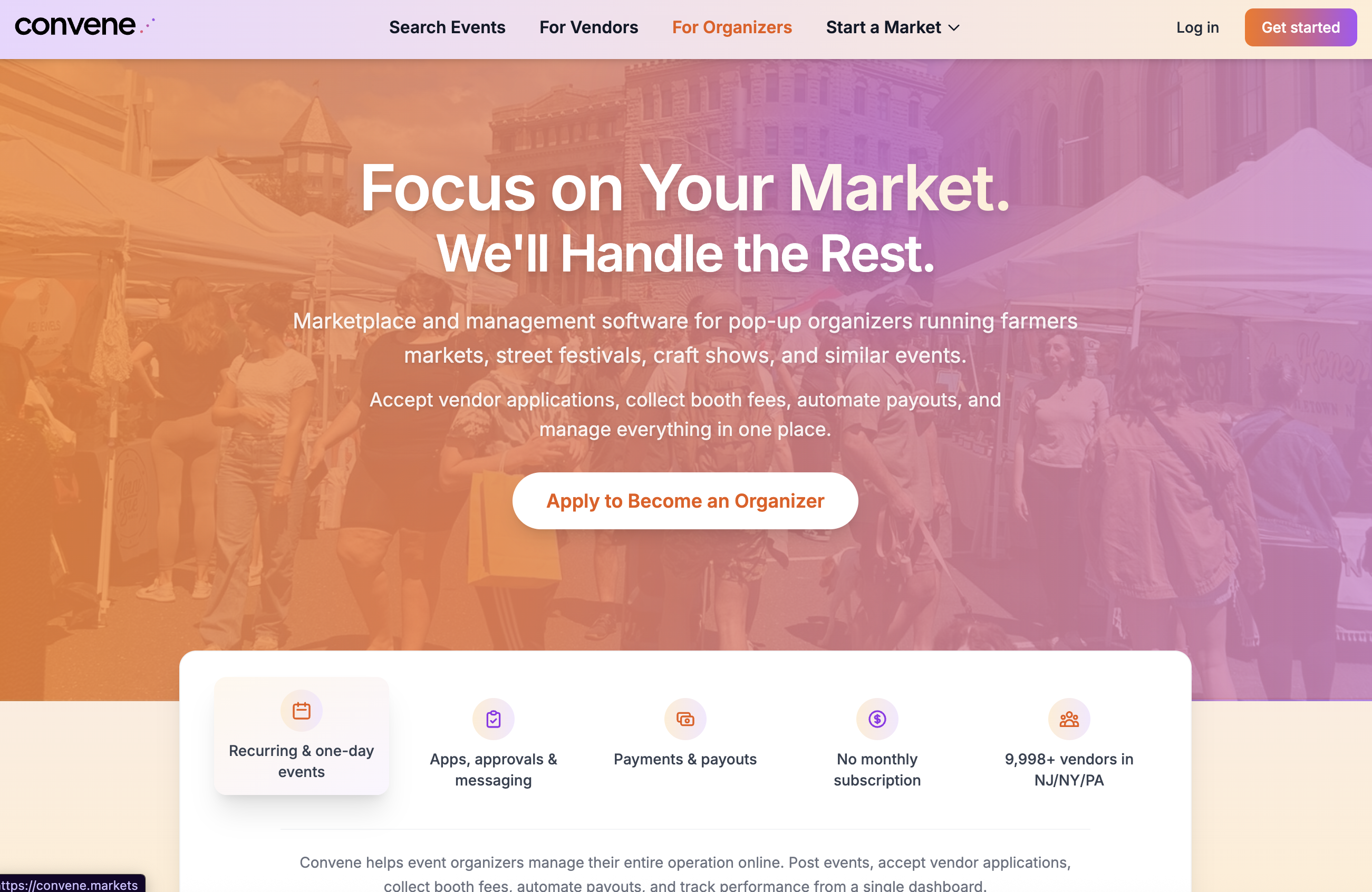
Software development timelines are often exaggerated, but I can easily say we shaved 6 to 9 months off a typical timeline by leveraging Claude Code and modern AI tools.
This may even be an understatement. The hard truth is that this product most likely would never have seen the light of day. Timelines aside, this project is much larger than anything I could have handled on my own. I would have needed a team of at least five to six developers, designers, and UI/UX specialists, and easily could have spent upwards of $150,000 just to get to an MVP.
That friction is not only completely removed, but like trying to recall life before kids, running a business without these tools is already a bit hazy.
We’re long past the early days of AI-generated code. Anyone who says otherwise is either ignorant or in denial about what these systems can do. Dario Amodei, founder of Anthropic, recently said that many of their top engineers are now using Claude to write 100% of their code.
Personally, I’ve found that the frontier models, currently Codex 5.3 and Opus and Sonnet 4.6, are better developers than I am. The real unlock for me was realizing I had to become a better thinker and learn to systematize my planning and decision making.
I think a lot of people, myself included at first, struggled with LLMs writing code simply because I didn’t know how to clearly convey what I wanted. It’s similar to hiring a new employee and getting frustrated when they don’t immediately know how to do what you ask.
Strong operators run on SOPs, processes, and documentation. Without them, things break down. The same rules apply whether you’re working with a person or an AI agent.
My current workflow — and I’m sure I’ll look back and laugh at how simple it is even later this year — is to take an idea for a feature, talk to ChatGPT and iterate, then have it design a PRD.
From there, I feed the PRD into Claude Code using their higher end models in planning mode. GPT gives me creativity and flexibility outside of the code, but because Claude can see the code, it can design a much more tactical implementation and often finds things that GPT missed.
I’ve also found that using competing models helps work through any misalignment or hallucinations — which have become increasingly rare. I then let it rip and more times than not, it’s able to 1-shot a solution or get me to that 90% mark where I step in and iterate until complete.
At that point, execution isn’t the hard part. Taste is.
These tools have essentially removed the software development constraint that has held back many startups and small businesses. We can now go from idea to a working product in hours or days instead of weeks or months, if not ever.
Over the past several months, Convene was just one of the ideas I was able to take from my head into the real world.
During that same stretch, I built and launched a fully functioning website and membership platform for our wine locker program at Marée, refreshed my personal website, and completed a full rebuild of The Surf Village site with tighter integration into our booking platform. I also built a custom tool for quickly theming and launching future real estate and hospitality projects.
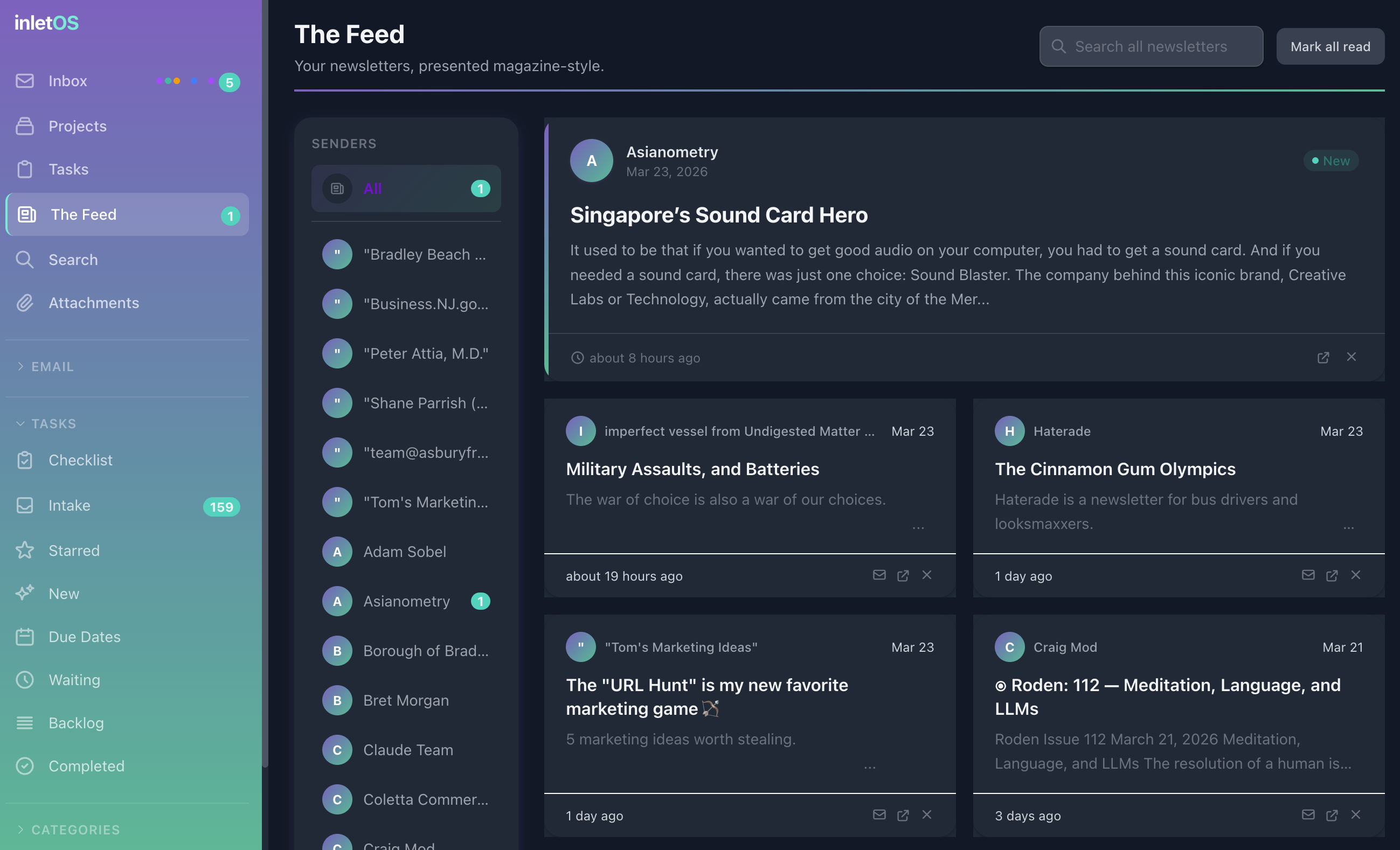
I also started building a tool I’m calling InletOS. On the surface, it’s the email and task management system I’ve always wanted. I’ve been using it for the past few weeks to run my business. I pulled together my favorite parts of tools like Asana, Spark Mail, and Hey! and built something custom that sits on top of Gmail and Google Apps.
If you’re interested in trying it, I’m sorry, it only has one customer right now. Maybe that will change at some point but for now I’m happier that way.
I’m now working on deeper integrations between Inlet and Handles, my OpenClaw orchestrator running on my Mac mini. He’s been handling my calendar and simple tasks for about a month since I brought him into the world but I’ve been giving him more responsibility. Just last week I upgraded his brain and gave him a bunch of middle managers and employees to manage.
Today I can assign tasks from Inlet, he picks them up, leverages a team of specialized agents, completes the work, and updates the task with relevant context, files, and outputs so I stay in the loop.
Granted, I may be on the extreme edge, but for how long?
Do you see where this is going?
- The friction between ideation and execution will be completely removed.
- Software and tools will be 100% customized to your business.
- An army of agent workers will take care of all the annoying shit.
I suppose the big outstanding question is who or what people will blame once 90% of the excuses for not starting are gone.
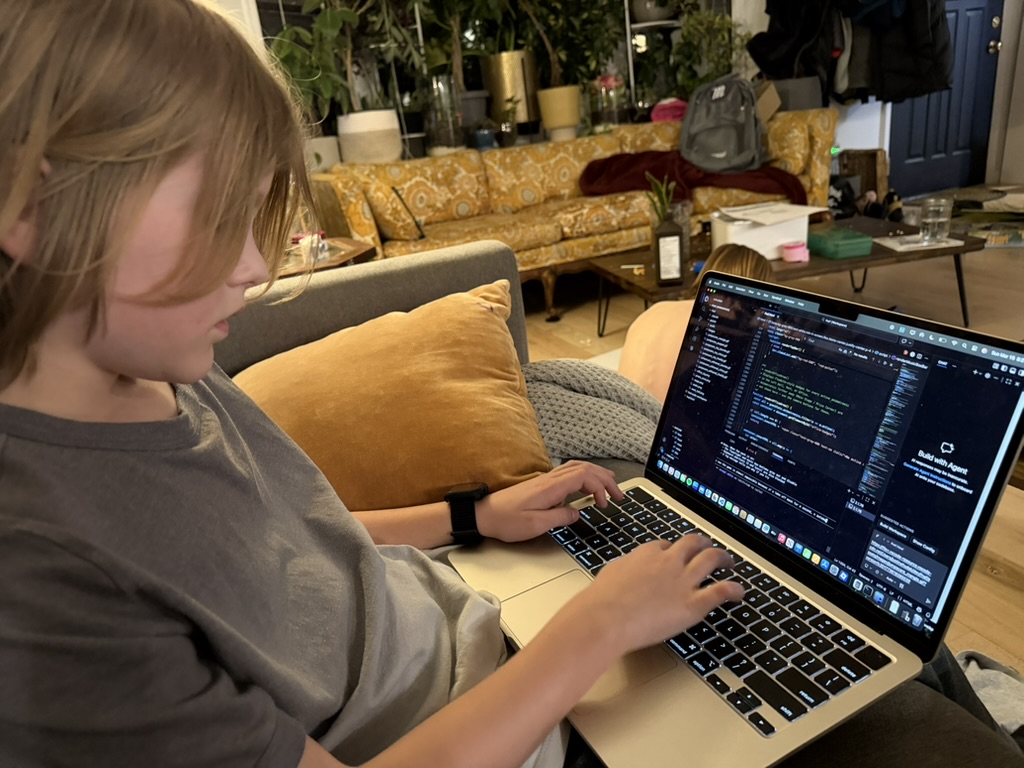
Atlas, who recently turned 10, came to me last weekend and said he was interested in getting back into coding. He’s been playing around on and off for a few years, and his attention usually lasts a few weeks before he moves on, so I jumped at the opportunity to introduce him to the latest tools.
Recognizing my limitations as a curriculum designer, I fired up Claude and had it build a lesson plan for a 10-year-old based on Five Nights at Freddy’s (or FNAF as the kids call it), one of his current interests. I figured that if I designed it around something he cared about, I might have a shot at keeping him engaged.
On a car ride to Point Pleasant Beach, I read the lesson plan to him. He pushed back on a few parts, mostly because it included features from older versions of the game that “nobody uses anymore.” Sensing the frustration, I asked what he would change. I mediated the back-and-forth between him and Claude, and by the time we got home, the lesson plan was dialed in.
He grabbed his (i.e. my wife Justine’s) MacBook, opened VS Code, and I set him up on my Claude Code account. I gave him a quick walkthrough, and within an hour he had worked through the lesson and built a rough prototype.
Then something interesting happened.
He skipped straight past the part that used to take me years.
Instinctively, he wanted to iterate and improve it. I told him to just ask Claude and keep going. Over the next few hours, he added animations, sound effects, and even used ElevenLabs on his own to create custom voice intros for each level.
The only parts I helped with were suggesting a leaderboard so his friends could compete, which introduced him to tools like Firebase, and getting it deployed to GitHub. After the initial setup, he was fully capable of handling it himself.
You can check out Night Shift and his latest creations Star Forge and Soundboard over at his Github.
Later that night, he told me how crazy it was that he could take something that didn’t exist and, a few hours later, have something real.
This is the future. And it’s coming for us all.